
Oil and Gas Video Production: How to Market Complex Energy Technology
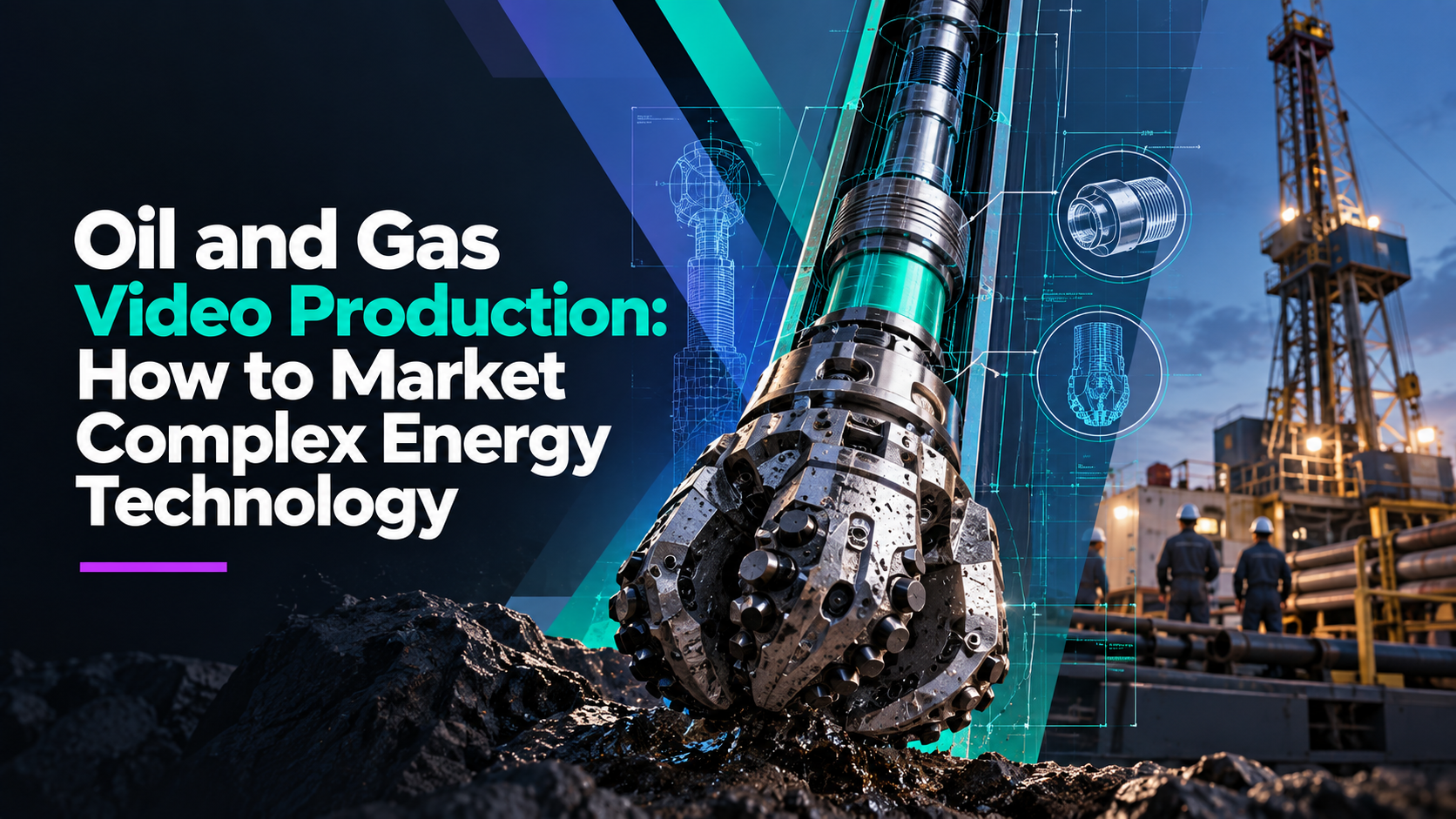
Energy Technology Is Hard to Film for a Reason
Some of the most important things happening in oil and gas technology happen where a camera can’t easily go.
Underground.
Inside equipment.
Offshore.
Under extreme pressure.
Inside a pipeline.
Inside a mechanical connection.
Or across a process so large that one camera angle could never explain the entire thing.
That creates an interesting marketing challenge. Your customers need to understand what the technology does. But the most important part may be completely invisible from the outside. That is where a combination of live-action video, motion graphics, and 3D animation can become particularly useful.
Start With the Operational Problem
Technical audiences don’t need hype. They need relevance. Before spending 45 seconds describing the technology, establish the problem it solves.
Maybe the existing process requires:
Additional equipment.
Specialized personnel.
Longer installation times.
More logistics.
Frequent maintenance.
More downtime.
Or several disconnected systems.
Once the audience understands the problem, the technical explanation has somewhere to go. Your technology becomes the answer rather than a list of features.
Use 3D to Show What the Camera Can’t
3D animation is particularly useful in energy and oil and gas marketing because it removes many physical limitations.
You can travel through a piece of equipment.
Reveal internal components.
Follow fluid through a system.
Show an installation sequence.
Demonstrate a downhole process.
Compare two systems side by side.
Make the exterior transparent.
Separate equipment into an exploded view.
Show technology that hasn’t been manufactured yet.
That doesn’t mean every energy video should be a futuristic 3D spectacle. The animation should exist because it makes the technology easier to understand.
Use Live Action to Establish Reality
Animation explains and live action proves the thing exists in the real world. A strong energy project may combine footage of the product, field environment, employees, installations, facilities, or customer interviews with technical animation.
A subject-matter expert can explain the challenge.
Then 3D animation can show what is happening inside the equipment. Then live footage can return us to the field.
Each format does what it does best.
Keep Engineering Involved
For technical energy content, accuracy is part of credibility. Subject-matter experts and engineers should not see the project for the first time at final review.
Bring them into the process during:
Messaging.
Script development.
Storyboards.
Technical diagrams.
3D modeling.
Animation previews.
It is much easier to correct the direction of a component in a storyboard than after several days of rendering. Early technical review protects both accuracy and budget.
Don’t Turn the Video Into a Spec Sheet
One of the biggest challenges in technical marketing is deciding what not to include.
Engineering may care about one set of specifications.
Field teams care about installation.
Procurement cares about equipment and logistics.
Leadership may care about overall operational impact.
Sales cares about differentiation.
If all of that goes into the first minute, the video can become impossible to follow.
Choose the primary audience.
Determine what they need to understand first.
Then build information in layers.
Detailed specifications can live in a technical sheet.
Your overview video doesn’t have to replace the entire sales process.
Think About Sales and Trade Shows From the Beginning
Oil and gas video rarely needs to live in only one place.
The same production may support:
Trade shows.
Sales presentations.
Product launches.
Technical meetings.
Website pages.
LinkedIn.
Training.
Distributor presentations.
Conference displays.
If those uses are known before production, the project can be designed more intelligently. A 3D product model built today may become the foundation of multiple pieces of content later.
Technical Doesn’t Have to Mean Dry
There is a tendency to assume industrial and energy content has to choose between accuracy and creativity.
It doesn’t.
Strong technical storytelling respects the engineering while giving the audience a clear visual path through the information.
At Control Shift Video, we create live-action video, motion graphics, and 3D animation for oil and gas, industrial, energy, and technology companies that need people to understand what is happening inside the technology—not just what it looks like from the outside.
Ready to Transform Your Video Content
Discover how Control Shift Video can elevate your brand's visual storytelling