
Lights, Camera… Don’t Panic: How to Prepare for Your On-Screen Interview or Video Shoot
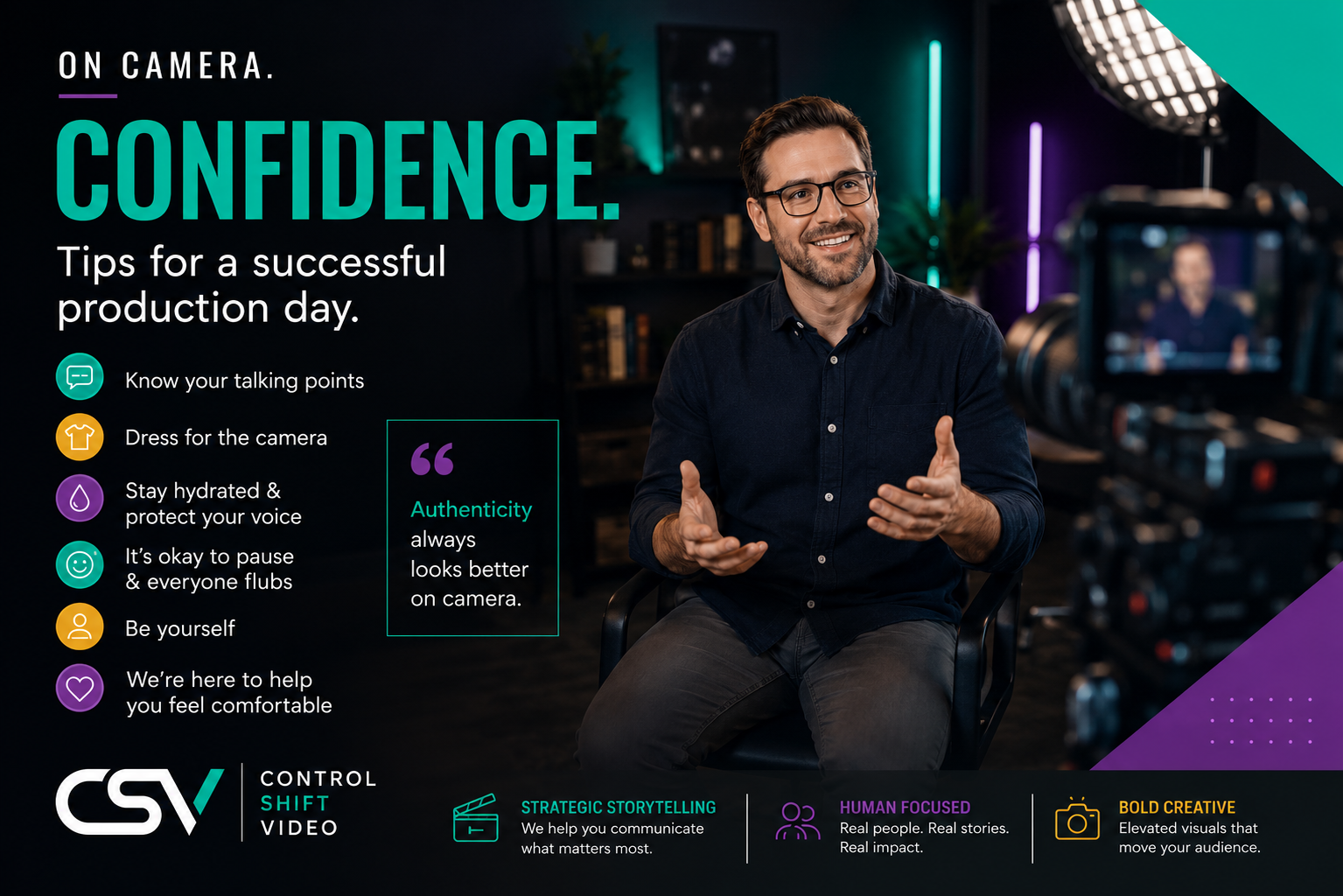
At Control Shift Video, we work with subject matter experts all the time — engineers, doctors, executives, technicians, educators, founders, and team leads who are incredible at what they do but may not spend much time in front of a camera.
Good news: you do not need to be a professional actor to look natural and confident on camera. In fact, some of the best moments happen when people stop trying to "perform" and simply speak like themselves.
If you've been selected to appear in an upcoming video, here's how to prepare for production day and what you can expect once the cameras start rolling.
Before Production Day: How to Prepare
Practice Your Talking Points — But Don't Memorize
If you've been given a script or interview questions ahead of time, spend some time getting familiar with them. Read them out loud. Practice explaining your answers conversationally.
The goal isn't to sound robotic or perfectly memorized. It's to feel comfortable enough with the material that you can focus on the conversation instead of trying to remember every word.
A good rule of thumb: know the idea you want to communicate, not necessarily every syllable.
Dress for the Camera, Not Just the Office
What looks good in person doesn't always translate well on camera. Here are a few safe bets:
- Solid colors generally work best
- Avoid tiny patterns, thin stripes, or busy prints
- Avoid clothing with large logos unless approved
- Bring backup outfit options if possible
- Consider the brand colors or environment you'll be filmed in
And yes — wrinkles show up on camera more than you think.
If you're unsure what to wear, ask the production team beforehand. We're happy to help guide wardrobe choices.
Glasses & Reflective Accessories
If you normally wear glasses, don't worry — you can absolutely wear them on camera. However, lighting can sometimes create glare or reflections on lenses. Anti-glare lenses tend to work best, and if possible, avoid transition lenses for outdoor shoots since they can darken unexpectedly on camera.
Large reflective jewelry, smart watches, or shiny accessories can also catch light and become distracting on screen. When in doubt, simpler is usually better.
Think About Hair, Makeup, and Grooming
You don't need full glam makeup or a professional stylist (unless the production calls for it), but a little preparation goes a long way.
A few quick tips:
- Reduce shine with light powder or blotting paper
- Bring a brush, comb, or basic touch-up items
- Facial hair trims and haircuts are best done a few days before filming instead of the night before
- Avoid trying dramatically new hairstyles right before production
The goal is simple: look like your best, most comfortable version of yourself.
Protect Your Voice
If you're going to be speaking on camera:
- Stay hydrated the day before and day of filming
- Avoid screaming at concerts or sporting events the night before
- Don't overuse your voice the morning of production
- Limit excessive caffeine if it dries out your throat
Your voice works harder on production days than you might expect.
Get a Good Night's Sleep
This sounds obvious, but it matters more than people realize. Fatigue shows up quickly on camera — especially in your eyes, posture, and energy levels.
Production days can also involve waiting periods while lighting, audio, and camera setups are adjusted. Coming in rested helps you stay focused and patient throughout the process.
Expect Mistakes — Seriously
Everyone flubs lines. Everyone.
Even professional talent loses their train of thought, stumbles over words, or needs multiple takes. That's completely normal and expected.
One of the biggest misconceptions about being on camera is the idea that you need to speak perfectly in one uninterrupted take. You don't.
In fact, it's completely okay to pause and think before answering a question. Taking a second to gather your thoughts often comes across as more natural and confident than rushing through an answer.
And if you mess up? No big deal. Pause, smile, reset, and start the sentence again. We edit around these moments all the time.
What NOT to Worry About
A few things people tend to stress about that really aren't a problem:
- Minor stumbles or pauses
- Knowing exactly what to do with your hands
- Sounding "professional enough"
- Perfectly memorizing every word
- Feeling nervous at the beginning
Truthfully, most people relax after the first few questions. The goal isn't perfection — it's authenticity.
What to Expect on Production Day
We'll Walk You Through Everything
When you arrive, the producer or director will usually give an overview of the day:
- What scenes are being filmed
- How the interview process works
- Where to look
- Who you'll be speaking to
- What happens if you make a mistake
You are not expected to figure this out on your own.
The Crew Will Do Audio, Lighting, and Camera Checks
Before filming begins, the crew will likely:
- Mic you up
- Adjust lighting
- Test camera framing
- Perform sound checks
- Dial in color and exposure
This can sometimes feel technical or time-consuming, but it's all part of making you look and sound your best.
Expect Some Waiting
One thing first-time talent often doesn't realize is that production involves a lot of moving parts.
The crew may need time to adjust lighting, reposition cameras, fine-tune audio, or make other technical tweaks between setups. Don't worry if there are occasional pauses or moments where you're waiting around.
That's completely normal and usually means the team is making sure everything looks and sounds as good as possible.
We'll Usually Start with Easy Questions
Most interviews don't begin with the "important" questions right away.
We often start with simple, low-pressure conversation starters like:
- What did you have for breakfast?
- What's your dream vacation?
- What music have you been listening to lately?
This helps you warm up, settle your nerves, and get comfortable talking naturally on camera before diving into the real interview.
Keep Going If You Mess Up
One of the biggest surprises for first-time talent: the cameras often keep rolling after a mistake.
That's intentional.
If you flub a line or lose your place, pause, take a breath, and restart from the beginning of the sentence or thought you want to redo. This makes editing much smoother later.
No need to apologize every time. We promise — we've seen it all.
Be Mindful of Nervous Fidgeting
Microphones are extremely sensitive.
Things that may seem small can become very noticeable in audio:
- Tapping fingers
- Clicking pens
- Jewelry clanking
- Shifting in chairs
- Rubbing hands on clothing
Similarly, repetitive movements can become distracting visually on camera.
If you tend to fidget when nervous, don't worry — the team will gently guide you.
Speak Up If You Need Anything
Too cold? Need water? Want a minute to regroup? Need another take?
Please say something.
A good production team wants you to feel comfortable, supported, and confident throughout the process. The better you feel, the better the final video will be.
Be Yourself
One of the biggest mistakes people make on camera is trying to sound like someone else.
The best interviews happen when people stop focusing on how they think they should sound and simply answer questions in their own voice.
Use your natural language. Tell stories. Share examples. Let your enthusiasm show.
We can always help refine a message. We can't manufacture genuine personality.
A Few Producer Secrets
After years of filming interviews and corporate video shoots, we can confidently say a few things are almost always true:
- The best takes are rarely the first take
- Almost everyone is nervous at the beginning
- The strongest moments usually happen once people stop trying to sound "perfect"
- Small pauses and natural reactions make people feel more genuine on camera
- We edit out mistakes, pauses, and awkward moments all the time
What feels awkward in the moment often looks completely natural in the final edit.
Remember Why You Were Chosen
You're not being filmed because you're a professional actor.
You're being filmed because you're the expert.
Whether you're explaining a process, sharing your experience, talking about your team, or helping tell a company story, your knowledge and personality are what make the video believable and engaging.
The audience doesn't want someone perfect. They want someone real.
So take a breath, trust yourself, and let your personality shine through.
That's usually where the best moments happen.
Need help preparing your team for an upcoming video shoot? Control Shift Video works with subject matter experts, executives, engineers, healthcare professionals, and everyday employees to help them feel comfortable and confident on camera. From interview coaching to full-scale production, we're here to help make the process easy, stress-free, and maybe even a little fun.
Ready to Transform Your Video Content
Discover how Control Shift Video can elevate your brand's visual storytelling