
How to Create B2B Customer Testimonial Videos That Feel Authentic
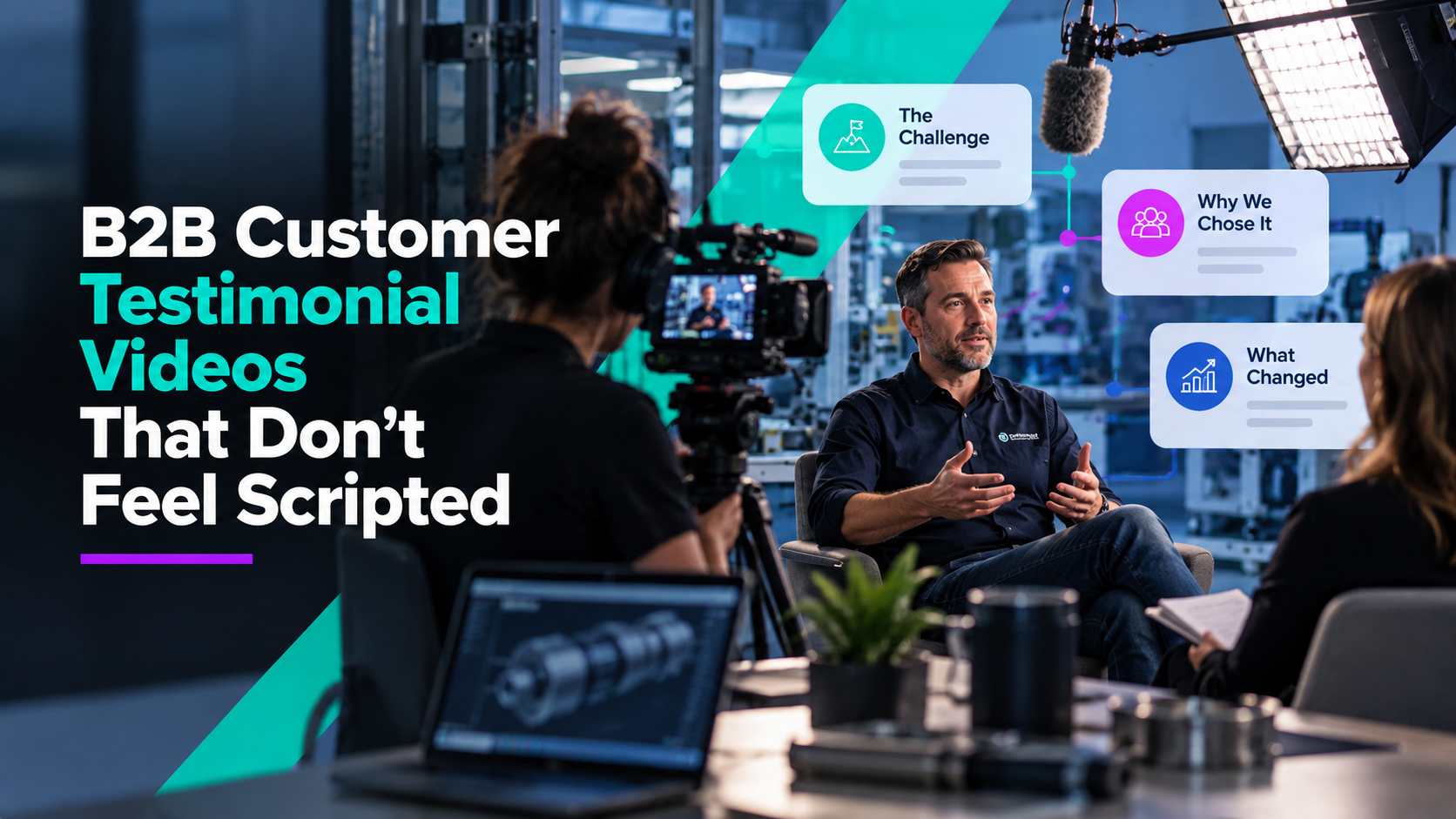
The Best Testimonial Usually Doesn’t Sound Like Marketing
You can tell when somebody has been handed a script. The wording is perfect. The product name appears every 15 seconds. Every sentence sounds suspiciously similar to the website. And somehow your customer has started speaking exactly like your marketing department.
That usually removes the thing that makes a customer testimonial valuable in the first place: Credibility.
Your customer’s job isn’t to perform your marketing copy. Your job is to help them tell their story.
Interview for a Story, Not a Compliment
If your first question is:
“So, tell us why Company X is amazing!”
You’re probably going to get a generic answer. Instead, start before your company entered the picture.
Ask:
What problem were you facing?
What wasn’t working?
How was that affecting your team?
What had you tried?
What were you looking for in a solution?
Then move into the decision.
Why did they choose your approach?
What made them comfortable?
What happened during implementation?
Finally, talk about what changed.
What became easier?
What improved?
What surprised them?
What would they tell another company facing the same problem?
Now you have a story.
Problem → decision → experience → change.
Give Customers Topics, Not Lines
Preparation is valuable. Memorization usually isn’t. Before the interview, customers should understand the general topics you’ll discuss. That gives them time to think through their experience. But sending exact answers can make the interview feel stiff.
If someone struggles with an answer, ask the question differently.
If they use industry jargon, ask:
“What does that mean for the person actually doing the work?”
If they say something interesting, follow up.
Sometimes the best part of the interview has nothing to do with the original question list.
Let Them Speak Like Themselves
Customers often use language that your marketing team wouldn’t have written. That can be a good thing. The phrase they naturally use to describe a challenge may be exactly the phrase another customer recognizes.
Their terminology.
Their frustrations.
Their priorities.
Their experience.
That is part of what makes the story believable.
Polish the edit. Don’t polish away their personality.
Capture the Environment Around the Interview
A testimonial should usually be more than someone sitting in a chair for two minutes.Capture the world around them.
Their facility.
The product.
The team.
Screens.
Meetings.
Machinery.
Employees working.
Interactions with the solution.
These visuals make the story more engaging while also giving the audience context.
If the customer says:
“Installation is much simpler now.”
Show it.
If they talk about their facility:
Show it.
If they mention their team:
Show them.
Build Short Clips for Sales
The main testimonial may be two or three minutes. Sales may only need 20 seconds.
Imagine a prospect asking:
“How difficult was implementation?”
Instead of sending an entire case study, your salesperson could share a short customer clip answering exactly that question.
Or:
“Why did you choose them?”
“What changed for your team?”
“How responsive were they?”
“What would you tell another company considering this?”
These smaller assets can make testimonial production considerably more useful.
Specific Stories Are More Credible Than Generic Praise
“Great company. Great people. Highly recommend.”
That doesn’t tell the audience much; specificity builds trust. A customer doesn’t necessarily need to reveal confidential performance numbers.
They can talk about:
A frustrating workflow.
A complicated installation.
A communication challenge.
A change in how their team works.
A problem they no longer have.
The more tangible the story becomes, the more useful it becomes to another potential customer.
Let the Customer Be the Customer
A strong testimonial should look polished. It should sound clear. It should have a story. But it should still feel like a real person describing a real experience.
At Control Shift Video, we interview customers, subject-matter experts, executives, and technical teams to uncover the story underneath the talking points—and shape those conversations into content that supports marketing, sales, and brand trust.
Ready to Transform Your Video Content
Discover how Control Shift Video can elevate your brand's visual storytelling